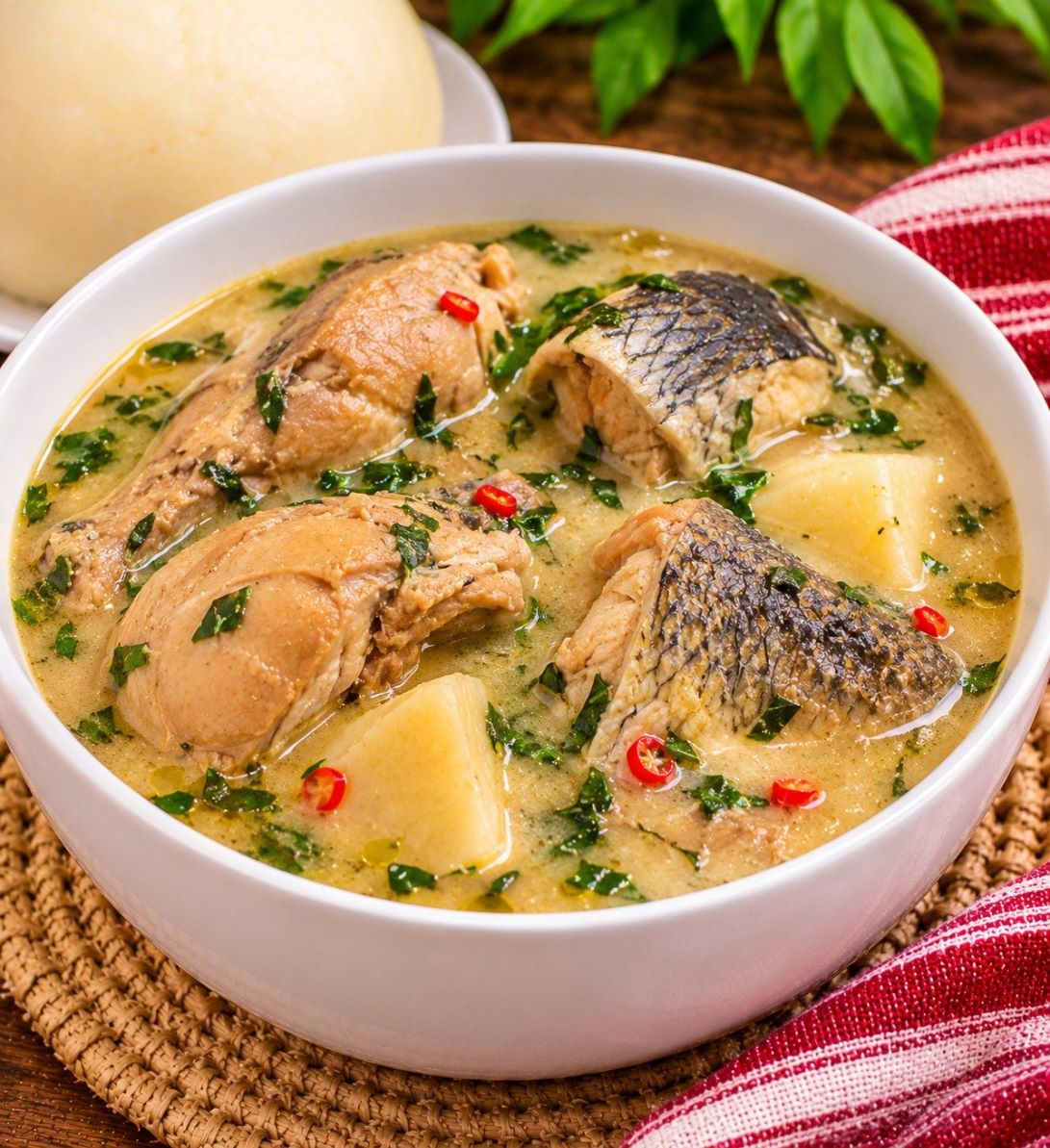
The story
Ewedu is one of the simplest soups in Nigeria and one of the most loved. There is no frying, no long simmering and no complicated spice mix. You boil fresh jute leaves until they are tender, then beat them with a special whisk until they become a smooth, silky, glossy green soup that clings to a ball of amala.
The traditional whisk is a wooden stick called an ijabe, which looks like a small branch with several prongs. You can use a whisk, a potato masher or even a blender instead. Ewedu is almost never eaten alone. It is poured next to gbegiri and tomato stew, and the three together are so famous that they have their own name, abula. If you only learn one Yoruba soup, make it this one, because it takes thirty minutes and teaches you a lot.
Also known as: Pronounced eh-WEH-doo. A smooth, green, slippery soup made from jute leaves, and the green third of the famous abula plate.
Why it is good for you
- Jute leaves, called molokhia in some countries, are a good source of vitamins A and C, folate, iron and fibre.
- The leaves are naturally slippery because of soluble fibre, which makes the soup gentle and easy to eat.
- Ewedu is cooked very quickly, so the leaves keep more of their nutrients than in a long-simmered soup.
- It contains almost no fat, so it is a light and refreshing partner to rich stew and gbegiri.